
About Us
Company profile
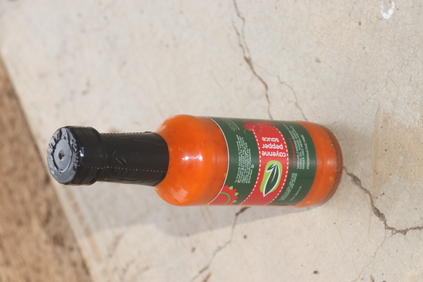
Lubombo Eco Products Multipurpose Cooperative Society is an umbrella body for three processing centres in the Lubombo Region established by three groups of women. This business operates in three processing centres: Tikhuba processing center (Spice Girls), Mpolonjeni processing center (Asiphile Bomake) and Shewula processing center (Vusimvelo). The umbrella body was created in the year 2019 by its members and is managed by LEP Board which is managing the whole value chain, especially coordinating the activities and marketing of products. It was established to organise, formalise and standardise the production, processing and marketing of eco-friendly products. The board owns a brand, “Lubombo Eco Products” which represents an innovation promoting economic benefits for small-scale farmers of the Lubombo Region, designed to fetch premium price in markets. Products from the centres are sold to formal and informal markets after value addition at premium prices. Only products that adhere to Eco Friendly production and processes are labeled with the LEP brand, while products which have not adhered to this will not be branded, a quality control system is in place to identify out of standard products. Lubombo eco products members produces chilli sauce, honey, pesto and legumes soups in the three centres. In the year 2024, chili sauce was certified by SWASA, this will open market channels to formal market.
What the LEP seeks to achieve
1. Improve market access opportunities - Lack of a coordinated value chain hampers smooth production and limits market opportunities
2. Increase product access to markets and consumers.
3. Improve farmer’s profitability by shortening the value chain and spreading costs of production. Farmers will have low transportation costs to markets.
4. Value addition
5. Coordinated production and marketing system – farmers will collaborate with vendors to understand products demand.
6. Organised farmers groups – the organised farmers groups will practice coordinated production and trainings can be facilitated easily by development agencies.
7. Product diversification
Organisational structure
The three processing centres are each managed by an operational committee and are all under the directorship and coordination of a Board formed by two representatives for each processing centre. LEP board formed by representatives of the three processing centres (2 from each PC) as a community-based management structure for an inclusive decision-making process. It is formally registered under the Cooperative Department of the Ministry of Commerce, Industry and Trade and is tasked with developing regulatory policies for management and administration of the processing centres.
Production
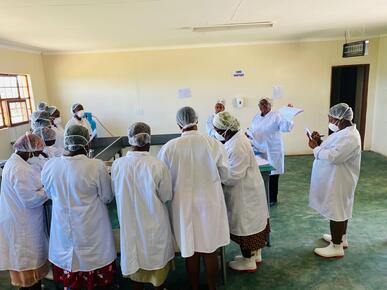
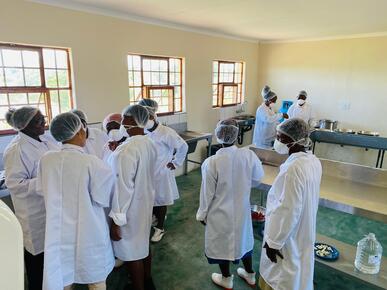
Farmers have been identified and trained on agro-ecological principles to produce and supply eco-friendly products to LEP, who in turn buy the products. The three processing centres in Tikhuba, Mpolonjeni and Shewula transform these products, adding value in order to gain more income and increase products access to markets. The processing centres are managed by capacitated operational committees (each centre has its own operational committee) which are responsible for the management and operations of the centre. In the processing centres there is coordinated and organized processing and packaging following laid down regulatory policies and procedures to achieve quality, maintain standards and quantities for all products under the brand.
1. CHILI SAUCE- Chili sauce is processed in all the three processing centres for informal markets, but Mpolonjeni processing centre focuses on the processing for the formal markets.
2. HONEY - Honey is procured from local bee keeping farmers as honey combs where it is procured on volume basis currently, procurement on weight bases is being introduced. It is processed in two processing centres; Tikhuba and Shewula.
3. LEGUME SOUP- Legume soups are processed in two processing centers where there is a high production of agro-ecologically produced legumes; Tikhuba and Shewula. Traditional African Vegetables and herbs are added to the legumes to improve the nutritional content and flavour. The competing soups in shops are in-organic soups with a lot of additives.
4. PESTO- Pesto is a relatively new product produced using agro-ecologically produced Traditional African Vegetables. The processing of pesto is done at Tikhuba processing center.
LEP is organised such that production is made easy because all members contribute to the production process. This process is done by rural women following hygienic practices in well equipped processing centres.